Understanding household electricity starts with two ordinary questions: what is running, and for how long? You do not need a complicated dashboard to begin. A bill, a short list of appliances and a few observations can establish a useful first picture.
Read energy and power separately
A power reading describes what is happening at an instant. An energy total describes what has accumulated over a period. A hypothetical appliance drawing a steady 100 W for ten hours uses 1 kWh: 100 multiplied by 10, divided by 1,000. A 1,000 W appliance running for one hour uses the same amount in this simplified calculation.
Neither figure, by itself, tells you which appliance is more useful or should be replaced. The calculation simply connects power and operating time. It also explains why a low-power device that runs continuously can deserve attention alongside a more powerful appliance used briefly.
Build a picture of an ordinary day
Divide a day into periods that match your routine: overnight, morning, daytime and evening. Note what usually runs in each period. Distinguish continuous loads, occasional loads and equipment that cycles automatically. A refrigerator’s compressor, for example, does not necessarily run at its rated input continuously.
| Period | What to observe | A useful note |
|---|---|---|
| Overnight | Devices left on and automatic equipment | Separate necessary operation from avoidable use |
| Morning | Heating, hot water and kitchen use | Which appliances overlap? |
| Daytime | Occupancy and flexible activities | Could any task move to another convenient time? |
| Evening | Cooking, lighting and entertainment | Compare a typical day with an unusual one |
Measure within safe limits
Use your meter or monitoring system according to its instructions. A plug-in energy meter, where appropriate and correctly rated, can help observe compatible plug-in equipment. Do not open electrical panels, alter wiring or improvise measurements on fixed equipment. Ask a qualified professional when the measurement requires electrical access.
Keep the context with the numbers
A week’s consumption may reflect unusual weather, guests or time away. Record those details before calling a change a trend. Heating and cooling needs can differ substantially across seasons. Compare periods that answer your question and avoid drawing an annual conclusion from a single short observation.
- Record the start and end dates for every total.
- Keep units visible: W, kW and kWh are not interchangeable.
- Note weather, occupancy and any equipment changes.
- Identify estimates clearly and replace them with measurements when useful.
Estimate the energy part of an electricity bill
Multiply electricity use in kWh by the applicable price per kWh to estimate the energy charge. For a hypothetical 200 kWh at $0.15 per kWh, the energy component is $30. This is an arithmetic illustration, not an Arkansas tariff or a complete bill estimate. Fixed charges, riders, taxes and any time-dependent rates need separate treatment. Use your actual bill and utility rate schedule when comparing periods or considering an upgrade.
Connect demand to generation
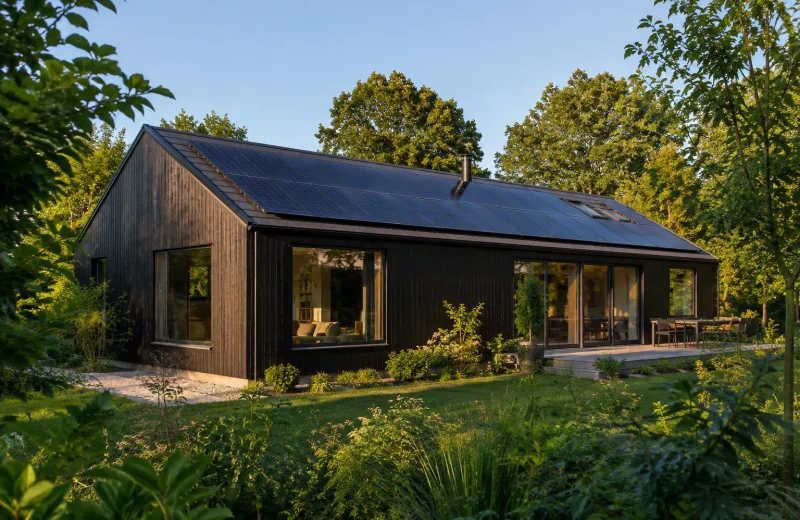
Solar generation and electricity use have their own daily patterns. Placing those patterns alongside each other helps explain why an annual solar total does not mean a home operates independently at every moment. Explore our guide to home solar for a worked explanation of those flows.
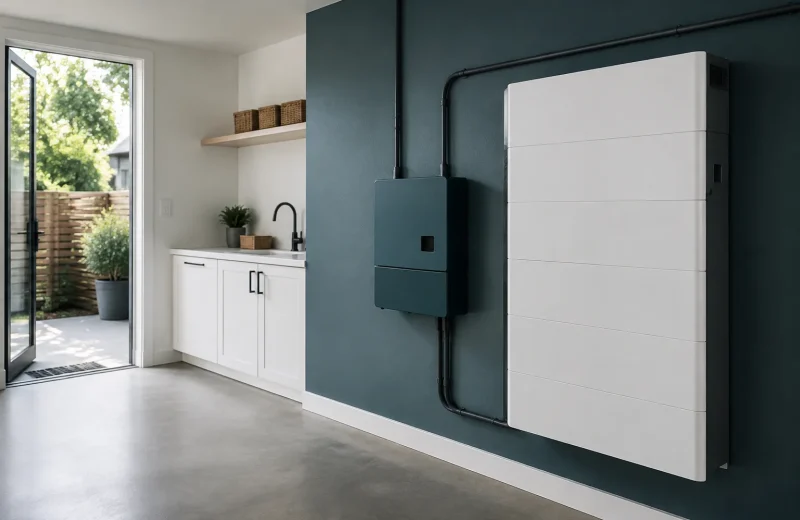
Storage adds another element to the comparison. The battery capacity guide separates available energy from output power, which is useful when considering a specific load over a specific period.
Choose the next question, not just a target
The first pass does not need to be perfect. Its purpose is to uncover a useful next question: why does demand stay high overnight, which activity creates an evening peak, or how does the heating schedule affect the daily total? A focused question is easier to investigate than a vague instruction to use less.
For a property-specific next step in Arkansas, explore Home energy audits & assessments and prepare the information described on the service page.
Frequently asked questions
Does a high power rating mean high total energy use?
Not necessarily. Total energy also depends on operating time. Compare power and time together, and distinguish rated input from measured operation.
Is one day enough to understand my home?
One day can be a useful starting point, but patterns vary with weather and routines. Record context and compare representative periods.
Should I measure inside an electrical panel?
No. Use monitoring equipment according to its instructions and within its intended purpose. Electrical access and fixed-equipment measurements require a qualified professional.