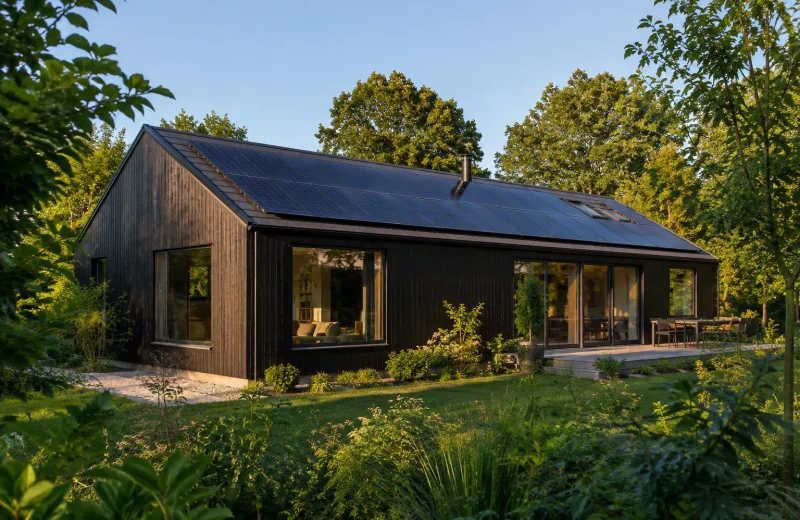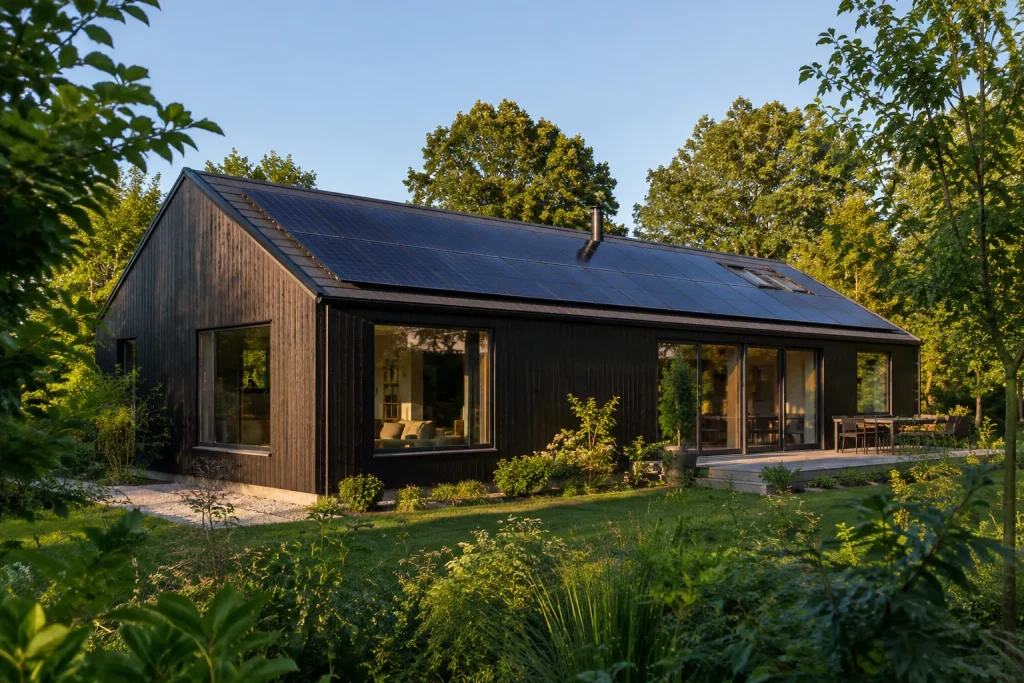
A rooftop solar system is easier to understand when you follow the path of its electricity. Start at the panels, pass through the inverter, then look at the appliances, any battery and the connection to the grid. Each part has a specific job. The useful question is not simply how many panels a roof can hold, but how that complete system fits the way a home uses energy.
This guide explains the principles in an international context. It does not assume a particular electricity tariff, export payment or installation standard. Those details need a local check. The examples below are deliberately simplified illustrations, not equipment recommendations or a design for installation.
1. From sunlight to useful electricity
Photovoltaic cells convert some of the light reaching them into electrical energy. Cells are assembled into modules, commonly called panels, and several panels form an array. Their output is direct current, or DC. Many household appliances and electricity grids operate on alternating current, or AC, so a solar inverter handles that conversion.
The panels are therefore one part of a larger system. Mounting structures hold them in position. Cables carry the electricity. Protection devices and switching equipment are part of the electrical installation. Monitoring equipment helps make the flows visible. The US Department of Energy’s photovoltaic overview describes this distinction between the modules and the complete system.
Power is a rate; energy is an amount
Power tells you how quickly energy is being generated or used at a particular moment. It is measured in watts or kilowatts. Energy adds up over time and is commonly measured in kilowatt-hours. A steady output of 2 kW for three hours would deliver 6 kWh. Real solar output changes throughout the day, so a daily energy total is the sum of many changing power readings.
Think of a chart with time along the bottom and power on the vertical axis. A tall, narrow peak can produce less total energy than a lower output maintained for longer. That is why a single peak reading does not describe a whole day’s performance. Look at both instantaneous power and accumulated energy when you explore a monitoring dashboard.

2. What each component does
A helpful way to read a proposed system is to ask for a plain-language explanation of each component. What does it connect to? What is its rating? What information can you see? Which tasks does it perform automatically? A clear answer should describe the complete arrangement rather than rely on a product’s marketing name.
| Component | Core role | A useful question |
|---|---|---|
| Solar array | Produces DC electricity from light | How will shade and roof orientation affect output? |
| Inverter | Converts electricity and manages specified operating functions | Which operating modes does this exact model support? |
| Battery, when included | Stores energy for use at another time | What are its usable capacity and power limits? |
| Monitoring | Shows generation, consumption or other measured flows | Which values are directly measured and which are estimates? |
| Grid connection | Connects the home to the wider electricity network | What import, export and protection rules apply locally? |
The inverter is more than a label
A string inverter can handle the output from groups of modules, while microinverters perform conversion at individual modules. Some systems also use power optimizers. These arrangements have different design implications; none is automatically best for every roof. Shading, roof geometry, service access and component compatibility should be assessed together.
Do not assume that the word “hybrid” promises every feature you might want. Ask which batteries are supported, whether backup is available, what additional equipment is needed and how the system behaves without an internet connection. For a technical introduction, see the Department of Energy’s explanation of inverters.
3. Where the electricity goes during a day
Imagine a home that is using 1 kW while its array is producing 3 kW at that moment. In a simplified system with no other flows or losses, the difference is 2 kW. What happens to that difference depends on the system: it may charge a battery, flow to the grid where permitted, or be curtailed. The actual controls and limits determine the result.
Later, suppose the home uses 2 kW while solar output has fallen to 0.5 kW. The 1.5 kW gap must be supplied from another available source, such as the grid or a suitably configured battery. This example is about the balance of power at one instant. To describe the whole evening, you also need to know how long those conditions last.
Self-consumption and self-sufficiency
These two ideas answer different questions. Self-consumption asks what share of your solar generation is used at your home. Self-sufficiency asks what share of your home’s electricity use is supplied by your own generation, including stored solar energy where relevant. A small system can have high self-consumption while covering only a modest fraction of household demand.
Always check how a monitoring platform defines its figures, especially where storage is involved. A diagram showing the measurement points is often more useful than a percentage in isolation. For further reading on the role of storage, explore our guide to home battery capacity.
4. Why output changes
The rating printed on a module is measured under specified test conditions. A roof experiences changing sunlight, cell temperature, shading and other conditions. A system’s real output therefore moves throughout the day and across seasons. Two arrays with the same rated capacity do not necessarily produce the same annual energy.
The Department of Energy’s performance and efficiency guide explains why test ratings and operating conditions should be distinguished. When you receive a forecast, ask which location and weather data it uses and whether it accounts for the roof’s orientation, slope and shading. A forecast should state its assumptions.
- Look at energy over an appropriate period, not one attractive peak.
- Compare the same season when reviewing year-to-year patterns.
- Keep records of faults, maintenance and changes in nearby shading.
- Ask how the model handles losses and any export limit.
- Separate a conservative expectation from a best-case illustration.
5. What a battery changes
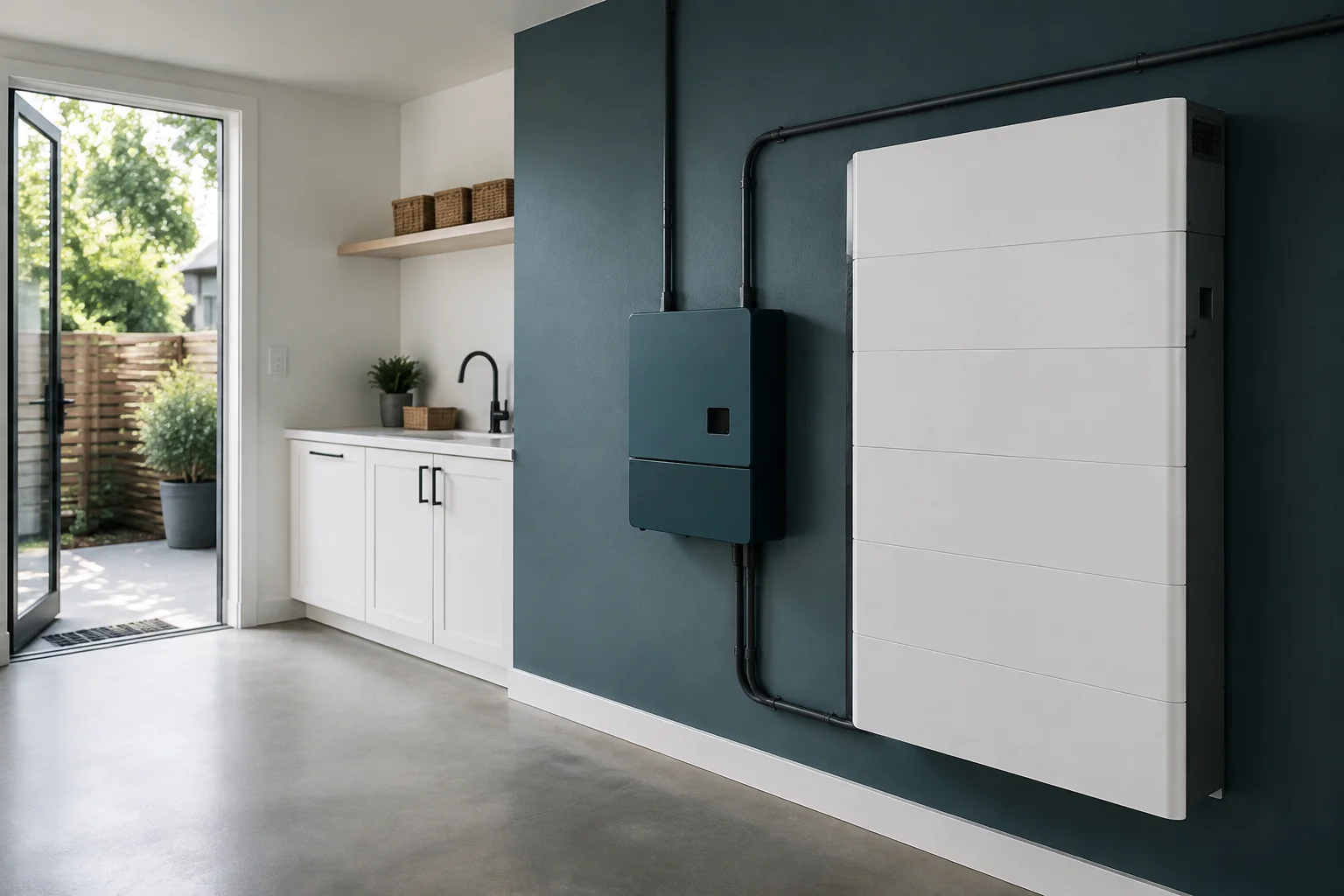
A battery adds another time dimension: electricity can be stored and used later. Its usefulness depends on when surplus generation occurs and when energy is needed. The storage system also has charging, discharging and capacity limits. Adding a battery does not make those limits disappear; it creates more choices for managing them.
A battery’s energy capacity is measured in kWh, while its power rating is measured in kW. These describe different capabilities. For example, a hypothetical battery with 8 kWh available to a load could support a constant 1 kW load for eight hours in an idealized calculation. Real operation must account for conversion losses, reserve settings and changing loads. See the NREL explanation of storage timescales for the distinction between energy and power capacity.
6. Solar panels do not automatically provide backup
A normal grid-connected solar installation may stop supplying the home during a grid outage. Supplying an isolated home requires equipment designed to manage that operating mode and separate the home safely from the wider grid. A battery alone is not proof that the complete installation supports backup.
Ask the designer to explain the outage sequence: which circuits remain powered, what starts the system, whether solar can recharge the battery during the outage and what happens when the battery reaches its reserve limit. The Department of Energy’s solar resilience overview provides context for systems designed to operate while isolated from the grid.
7. Prepare a useful first conversation
Before discussing a specific package, collect a basic picture of your home. Note the periods when people are usually present, whether heating or transport use electricity, and whether those patterns are likely to change. A planned electric vehicle or heating change can be relevant, but clearly separate existing demand from a future possibility.
- Collect available electricity-use records and note any unusual periods.
- Describe the roof and any known shading or planned building work.
- Write down your main aim: understanding generation, increasing on-site use or supporting selected loads during outages.
- Ask for a simple system diagram and a list of operating assumptions.
- Request separate explanations of capacity, expected energy and backup capability.
- Keep the model numbers, documentation and monitoring access instructions together.
If you do not yet know where electricity is going, our home energy-use guide is a useful companion. Understanding demand makes the generation side easier to interpret. You can also browse the solar energy library or follow the solar panels topic as more guides are added.
8. Read the system as a whole
The most useful solar explanation connects generation, conversion, consumption, storage and the grid. Once those flows are clear, individual specifications become easier to place in context. You can ask more precise questions without needing to become a system designer.
Keep three distinctions in mind: power is different from energy, rated capacity is different from delivered output, and grid-connected generation is different from backup capability. With those foundations, the next conversation can focus on your actual needs and the conditions at your home.
For a property-specific next step in Arkansas, explore Home solar panel installation and prepare the information described on the service page.
Frequently asked questions
Can a solar system work on cloudy days?
Photovoltaic panels can generate electricity from available daylight, but output depends on conditions. A cloudy-day output is not the same as the rated output measured under test conditions.
Does a larger solar array always mean more independence?
No. Independence also depends on when you use energy, the available storage and the system’s operating capabilities. Annual generation alone does not show what happens at each moment.
Do all solar systems provide backup?
No. Backup requires a complete installation designed for isolated operation. Confirm which circuits and loads are supported and what additional equipment is required.
What should I understand before comparing systems?
Start with the distinction between kW and kWh, your electricity-use pattern and the purpose of each component. Then ask for a proposal that states its assumptions and operating limits.